ශ්රී ලංකා මහ කොමසාරිස් කාර්යාලය, බංගලාදේශය
இலங்கை உயர் ஆணையம், பங்களாதேஷ்
High Commission of Sri Lanka, Bangladesh

Diplomatic Relations between Sri Lanka and Bhutan
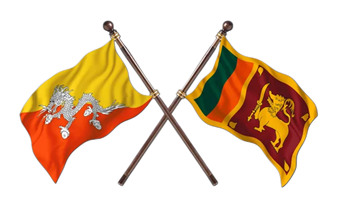
Sri Lanka and Bhutan established diplomatic relations on 13 May 1987. Since then, the two countries have enjoyed warm, cordial, and mutually respectful relations founded on shared values, deep-rooted religious and cultural affinities, and a longstanding tradition of friendship and cooperation.
Over the years, bilateral engagement has continued to expand across a broad range of sectors, particularly in education, healthcare and medical cooperation, capacity building and technical training, social development, religious and cultural exchanges, tourism promotion, and people-to-people connectivity.
The High Commission of Sri Lanka in Dhaka, Bangladesh, is concurrently accredited to the Kingdom of Bhutan. The High Commissioner of Sri Lanka in Dhaka serves as the non-resident Ambassador to Bhutan, while the Ambassador of the Kingdom of Bhutan in Dhaka is concurrently accredited to Sri Lanka.
Sri Lanka and Bhutan also work closely together in several regional and multilateral organizations and forums, including the South Asian Association for Regional Cooperation (SAARC), the Bay of Bengal Initiative for Multi-Sectoral Technical and Economic Cooperation (BIMSTEC), the Colombo Plan, the Non-Aligned Movement (NAM), and the United Nations (UN).
As close partners in South Asia, Sri Lanka and Bhutan remain committed to further strengthening their longstanding friendship and expanding bilateral cooperation while promoting regional collaboration and multilateral diplomacy for the shared prosperity and well-being of the peoples of both countries.
Sri Lanka - Bhutan Bilateral Trade, Investment, Tourism, and Economic Relations
Bilateral trade, investment, and tourism between Sri Lanka and Bhutan remains minimal. There is no significant trade volume between the two countries, with only a small exchange of goods taking place on an ad hoc basis. Tourism exchanges are also modest, though there is potential to promote niche segments such as cultural and eco-tourism through closer collaboration and improved connectivity in the future.